
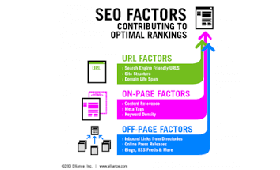
Google uses hundreds of signals to decide where your page lands in search results — but you don’t need to track all of them. In practice, Google ranking factors group into five areas: content, technical site health, off-page trust, personalization, and the violations that actively hurt you. Get the big five right and the long tail of minor signals mostly takes care of itself.
On-Page Content Factors
Content is still the foundation. Three things matter most:
- Quality. Does the page say something unique, or is it a rehash of what’s already ranking? Search engines reward content that’s genuinely useful enough to keep someone reading and worth sharing.
- Keyword research. Match your content to what people actually type, not what you assume they type. Google Search Console’s own query data is the cheapest, most accurate research tool you already have.
- Freshness. Search engines favor recently updated content for topics that change — pricing, best practices, “in 2026” style queries. A page that hasn’t been touched in years quietly loses this signal even if nothing else changed.
Technical and Site Architecture Factors
A great page that search engines can’t crawl, load quickly, or trust on mobile won’t rank no matter how good the writing is.
- Crawlability. Every site has a crawl budget. Clean internal linking, a submitted XML sitemap, and a sensible robots.txt help search engines actually find and index your best pages instead of wasting budget on junk URLs.
- Duplicate content. WWW vs. non-WWW, filtered/paginated URLs, and near-identical pages split your ranking signal across multiple URLs. Canonical tags and 301 redirects consolidate it back onto one authoritative version.
- Mobile-friendliness and speed. Google indexes mobile-first. A responsive layout, compressed images, and fast load times aren’t optional extras — they’re baseline requirements now.
- HTTPS. A small direct ranking boost, but a real trust signal, especially on any page asking for contact details or payment.
- Structured data and header tags. Schema markup earns rich snippets that lift click-through rate even without a ranking change. Clean heading tag structure (one H1, logical H2/H3 nesting) helps both search engines and AI-driven answer engines parse what a page is actually about.
Off-Page Trust and Authority Factors
Once the page itself is solid, Google checks whether the rest of the web vouches for it.
- Link building. Not all backlinks are equal — a link from a relevant, authoritative site counts far more than dozens from low-quality directories. Anchor text still signals topic relevance, even though you can’t fully control it.
- E-E-A-T (Experience, Expertise, Authoritativeness, Trustworthiness). Google explicitly evaluates whether content demonstrates real experience and expertise, not just keyword coverage. Author credentials, cited sources, and a verifiable business behind the content all feed this signal.
- Engagement signals. Bounce rate, time on page, and repeat visits indirectly tell search engines whether people found what they were looking for. This is also exactly what a real SEO competitor analysis should be benchmarking against.
- Social signals. Shares and mentions don’t rank pages directly, but they drive the referral traffic and backlinks that do — see our deeper breakdown of how social media and SEO actually connect.
Personalization and Local Signals
Two searchers typing the identical query rarely see identical results anymore. Location is the biggest factor — country and city-level personalization means a site with no relevance to a searcher’s area has little chance of surfacing for local intent, which is exactly why accurate Google Business Profile categories and consistent local business directory listings matter so much for anything location-based. Personal search history and social connections play a smaller, harder-to-influence role — the practical takeaway is the same one that applies everywhere else: build a site good enough that people come back to it and share it directly, since that behavior is itself a ranking signal.
Ranking Violations and Penalties to Avoid
Negative signals subtract as much as positive ones add — sometimes more. The most common self-inflicted ones:
- Thin or shallow content. Pages that don’t say much get filtered out for the queries they’re targeting, a legacy of Google’s original Panda update that’s still fully in force today.
- Cloaking. Showing search engines different content than users see is treated as deceptive and penalized hard.
- Keyword stuffing and hidden text. Unnatural repetition or text hidden from users but visible to crawlers both violate guidelines and read as spam to actual readers too.
- Paid links and link spam. Buying links or generating them with automated tools can trigger a manual action — even Google’s own Japan division was penalized for exactly this once.
- Overuse of ads or copyright violations. Ad-heavy pages that bury the content, and any DMCA-flagged material, both carry direct penalty risk.
How to Prioritize When You Can’t Do Everything
With over 200 known signals and thousands of sub-signals, trying to optimize everything at once is how most sites stall out. Work in this order: fix anything in the violations list first (it’s actively working against you), then technical health (nothing else matters if the page can’t be crawled or loads on mobile), then content quality and keyword alignment, then off-page authority. Track the result with the same discipline covered in how to track SEO performance — impressions and position tell you whether the changes actually moved anything.
Frequently Asked Questions
What are the most important Google ranking factors in 2026?
Content quality and search-intent match, technical crawlability and mobile performance, and off-page trust signals like backlinks and E-E-A-T remain the three biggest levers — everything else is a smaller multiplier on top of those.
Do social media signals directly affect rankings?
Not directly. They drive the traffic and backlinks that do influence rankings indirectly.
How many ranking factors does Google actually use?
Google has cited over 200 signals with thousands of variations, but a small number — content quality, technical health, and backlink authority — account for most of the practical difference in rankings.
Can a site recover after a ranking penalty?
Yes, but recovery is slower than avoiding the penalty in the first place. Removing the offending practice (thin content, spam links, cloaking) and rebuilding a consistent, clean history over time is the only reliable path back.
Want a straight read on where your own site stands against these factors? Get in touch and we’ll walk through it with you.